
How We Can Help With A Real Estate Appraisal for a Divorce
Divorce Home Appraisal | Get an Accurate & Defensible Valuation
Confidential & Court-Defensible Divorce Appraisals
Before you read on, please know that we offer a live chat feature on this page, connecting you directly to me, the Chief Appraiser. If you have any questions about getting a divorce home appraisal, click the blue chat icon in the bottom right corner. I’ll answer right away.
✔ Completely private
✔ Completely free
✔ No obligation
You can also call me directly at 616-334-7681 for a confidential conversation.
Going Through a Divorce? You’re Not Alone.
If you’ve landed on this page, chances are you’re going through a divorce or preparing for one. First, let me say—I’m sorry that things haven’t worked out as planned. I’ve been through it myself, and I understand how stressful and emotional this process can be.
Dividing assets, deciding what to do with your home, or determining a fair buyout price can feel overwhelming.
I get it!
At Real Value Appraisal, we specialize in divorce home appraisals, offering accurate, court-defensible valuations to help you move forward with clarity and confidence.
Why You Need a Divorce Appraisal
When it comes to your marital home, you typically have two options:
✔ Sell the property and divide the proceeds
✔ One party "buys out" the other and keeps the home
In either case, you need a professional divorce appraisal to determine an accurate and fair market value. Our appraisals serve three critical purposes:
1️⃣ Court-Defensible Accuracy – If your case goes to court, our appraisals hold up under scrutiny.
2️⃣ Faster, Less Stressful Settlements – A fair valuation helps both parties reach an agreement more easily.
3️⃣ Maximizing Your Financial Outcome – Whether you’re selling or buying out, we ensure you get every dollar you deserve.
Why Choose Us for Your Divorce Appraisal?
✔ 30+ Years of Real Estate Expertise – Licensed appraiser, former real estate agent, and lender since 1994.
✔ Divorce Appraisal Specialists – We understand the complexities and emotional weight of divorce property valuations.
✔ Private & Confidential – Your appraisal is handled with complete discretion and professionalism.
✔ Expert Witness Testimony – We provide court-ready appraisals and expert witness support when needed.
✔ Cutting-Edge Video Briefings – We offer a video summary of key appraisal points to streamline mediation or trial discussions.
Need a Second Opinion? We Review Existing Appraisals!
If you’ve received an appraisal from another appraiser, we can review it for accuracy and identify any discrepancies. Our thorough analysis ensures you’re working with the most reliable valuation possible.
Get Answers Now – Free & Private Consultation
If you're in the process of divorce or just researching what to expect, let’s talk. It’s free, completely confidential, and there’s no obligation.
💬 Click the blue chat icon (bottom right) to start a private conversation now.
📞 Call or text me directly at 616-334-7681 for expert guidance on your situation.
You don’t have to navigate this alone—I’m here to help.
FAQs About Divorce Appraisals
❓ How long does a divorce appraisal take?
Most appraisals are completed within 3–5 business days, but we can expedite the process if needed.
❓ How much does a divorce appraisal cost?
Costs vary depending on location and property complexity. Contact us for a free quote.
❓ Will my appraisal hold up in court?
Yes! Our appraisals are court-defensible, and we can provide expert witness testimony if needed.
📞 Call now: 616-369-1990| 💬 Start a live chat (bottom right)
Call me at 616-369-1990 and I'll talk as long as we need to get all of your questions answered. I look forward to speaking with you.


© 2025 Real Value Group
Elite Broker Blogs
━━━━━━━━
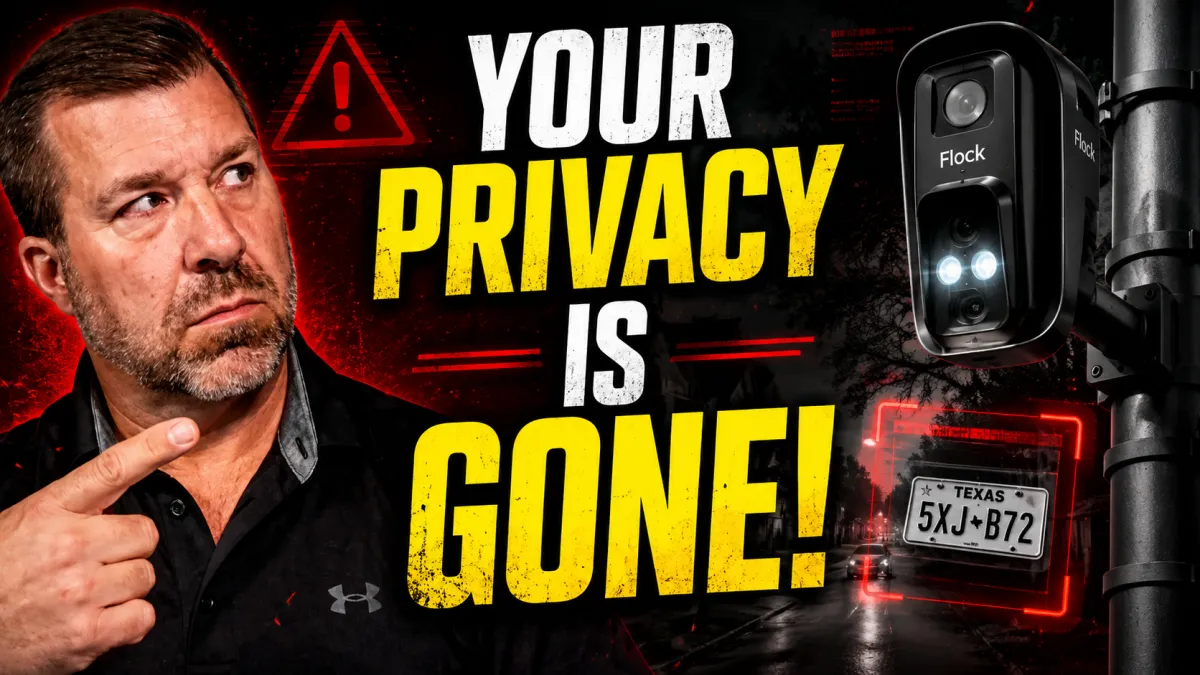
Are Surveillance Cameras Affecting Home Values?

There's a new feature showing up in neighborhoods across this country, and it isn't a pool, a clubhouse, or a walking trail. It's a camera. Specifically, it might be a Flock Safety camera, an Axon system, or an automated license plate reader sitting at the entrance to a subdivision, a business district, or a stretch of public road. Police departments, HOAs, property managers, and private communities are installing these things fast.
Supporters say they cut crime and help catch stolen vehicles. Critics say they're building a surveillance network on people who've done nothing wrong. That fight is already happening in the news. But there's a question almost nobody in the real estate, appraisal, and lending industries are asking, and it's the one that actually matters to us: does this currently, or will this in the future, move home values?
I'm not here to argue politics. I'm here as an appraiser. Our job is to study buyer and market behavior, what drives demand, what drives marketability, what moves price. If enough buyers start caring about neighborhood surveillance, we don't get to sit this one out. And here's the honest answer up front, in case you're wondering, there is no solid U.S. data yet proving these systems move prices one way or the other.
The technology is outrunning the research at this point. And that should bother you a little bit, because it means most appraisers, heck, most real estate pros will be flying blind on this the first time it actually shows up in a transaction.
Security versus surveillance is the real fight, and it's emotional, not logical. At least that's what they’re telling is it's about. One buyer sees a camera at the entrance and thinks, good, somebody's watching, this place is safer. Another buyer sees the exact same camera and thinks, why is this thing recording everyone who comes and goes? Same camera. Same street. Two completely different reactions.
And real estate is driven by emotion a lot more than any of us like to admit. Buyers often build a logical case for buying something after they've already made the emotional decision; I know I often do. They'll tell you they chose the house for the square footage, the location, or maybe the school district. The reality is that underneath all of that that is a feeling , does this place feel safe, does it feel private, does it feel like home. And a camera can shift that feeling in either direction, and the only question worth asking is whether enough buyers care about it to move the market.
Now, there is some international research here worth mentioning. A study out of China found that higher concentrations of surveillance cameras were tied to HIGHER property values, and the researchers linked it to lower crime and better perceived safety. Interesting, but, as we all know, China is not the United States. Different trust in government, different privacy expectations, different legal environment. That study tells us surveillance can move value. It does not tell us how American buyers will actually react.
Here's what we do know. Crime moves value. Every Realtor and appraiser watching already understands that neighborhoods with more theft, vandalism, or vehicle break-ins tend to see weaker demand than comparable areas without that history. We also know what it does to sale prices at scale in areas where crime rates are higher. Parents care about safety. Older buyers care about safety. Anyone with a nice vehicle in the driveway cares about safety.
If these camera systems genuinely reduce crime, they could absolutely support value. But that's a big if, if installing a camera doesn't automatically reduce crime. Placement, monitoring, police response, and community buy-in all matter. A camera that records a break-in but doesn't prevent it or lead to an arrest isn't changing anybody's behavior. The value isn't necessarily in the hardware. It's in the outcome.
And that outcome could get marketed. In fact, it already is, at least by the companies selling and installing the cameras. Don't be surprised if you start seeing listing language like "camera-monitored community" or "protected entrance" the same way we already see "gated," "controlled access," or "24-hour patrol." We already market security. A camera system is just the next line item — and in a neighborhood with a real history of break-ins, some buyers are going to see that as a legitimate selling point, not a red flag.
Now here's the other side, and it's not really about the camera — it's about the network behind it. These systems can collect plate numbers, vehicle descriptions, timestamps, and movement patterns, and depending on the policy, that data can be searchable and shareable. Who has access? How long is it stored? Can the HOA pull it? Can police from another jurisdiction use the info? Can the rules change later without anyone telling the homeowners? Most buyers will never ask those questions. But the buyers who do ask them are often exactly the ones with the income and the options to walk away from a neighborhood that makes them uneasy.
Privacy is becoming a luxury feature. For years, privacy in real estate meant acreage, trees, and distance from your neighbors. Increasingly, it's going to mean freedom from being tracked every time you pull out of your own driveway.
There's also a stigma risk nobody's pricing in yet. Drive into a neighborhood loaded with plate readers, warning signs, and visible security tech, and one buyer thinks "protected." Another thinks "what happened here that they need all this?" It's the same psychology as bars on a window, they might improve security, but they also broadcast that security was necessary. A camera system can quietly reduce crime while simultaneously making the neighborhood feel less safe. And that's not a contradiction. That's how perception works, and perception, to a large degree, is what drives markets. It doesn’t matter if it’s the stock market or the real estate markets. Perception matters.
Here's my real prediction: the camera itself will rarely move the needle. Bu the controversy around it will. A quiet, unremarkable camera at a subdivision entrance won't register with most buyers at all, especially since they're going to get better and better at making them more discreet. A neighborhood in the news for lawsuits, angry HOA meetings, vandalized equipment, or accusations of misuse, that's a different story entirely. Buyers avoid conflict. They avoid uncertainty. Nobody wants to buy their way into somebody else's legal battle. I've seen this pattern play out with shared driveways, road associations, and HOA disputes for thirty years. The physical condition isn’t always the real problem. The conflict around it is often the problem, and surveillance is just the newest version of that same story.
From an appraisal standpoint, this is going to be brutally hard to isolate, and I want to be straight with you about that instead of pretending there's a clean formula coming. For many of us, depending on where in the country you live, we can't say with confidence that solar panels move the needle to the positive, and it’s the same with these cameras for now.
Neighborhoods that install these systems are often already different; higher crime, stronger HOAs, more rental turnover, denser housing. If a camera-equipped neighborhood sells for less than one without cameras, that proves nothing on its own. You'd need before-and-after sales data, a legitimate control group and neighborhood, and enough volume to mean something statistically. Good luck getting clean data on any of it.
Here's where I think this actually shows up first, and it's not necessarily the sale price, it's days on market. Say ten percent of buyers genuinely dislike neighborhood surveillance. They tour the house, spot the system, and quietly cross it off the list. The other ninety percent are still willing to buy at market price, so the final number barely moves. But the buyer pool just got smaller, and the home sits longer. That's a real marketability signal, and it's exactly the kind of signal most appraisers miss because we're trained to stare at price and ignore everything else; marketing time, concessions, cancelled contracts, showing activity. Price is often the last thing to move.
Real estate agents are going to see this shift before we do, because they're the ones standing in the driveway when a buyer says, "I love the house, but I don't love those cameras," or the opposite, "I actually feel safer knowing they're watching the street." If I were researching this in my own market, I wouldn't start with a spreadsheet. I'd start with real conversations with agents who work those neighborhoods: how often buyers bring it up, whether the reaction skews positive or negative, whether anyone's walked away from a contract over it, whether the HOA is even disclosing the system exists in the first place, and whether people actually notice or not.
And that's the real tension underneath all of this, disclosure. Should a seller or an HOA be required to disclose an automated plate reader system in the development or on the pole at the end of the street? Would a buyer expect to know how long that data is stored, or who can access it? I don't know where the legal line ends up. But from a pure market-behavior standpoint, hidden surveillance is always going to carry more risk than visible surveillance. People forgive things they're told about upfront. They don't forgive finding out after closing that every vehicle in and out of their new neighborhood has been logged for the last two years.
Zoom out, and this isn't really a story about Flock or Axon. It's a story about a physical world that's becoming permanently searchable; doorbell cameras, traffic cameras, plate readers, drones, smart streetlights, private systems feeding directly into police databases. In the past, somebody might have seen you drive into a neighborhood. Today, a system logs your plate, timestamps it, and makes it searchable forever.
That trend isn't slowing down, and buyers are going to develop stronger opinions about it whether we're ready for them or not. I think digital privacy becomes a genuine property feature over the next decade; the same way home offices and broadband speed quietly became non-negotiables nobody was asking about ten years ago.
So, could this create a premium? Yes, if a community can show a real, measurable drop in crime, buyers will reward that, even if they can't put a dollar figure on it themselves. They won't say "I'll pay ten grand more for the camera." They'll say, "this place feels safer," and that feeling drives demand, retention, and reputation. Could it create a discount instead? Also, yes, if buyers see the system as intrusive, secretive, or poorly managed, they won't fight about it. They'll just buy somewhere else, and reduced competition eventually shows up in price, especially in higher-end markets where buyers have the luxury of being picky.
So, what do you think? Do you think these surveillance and tracking devices should increase home values? Should people be concerned about them? Do you think they will eventually affect home values negatively? Post it in the comments and let's have a discussion about it.