
What Is An FHA Appraisal And Why Does It Matter To You?
FHA stands for the Federal Housing Administration and is one of the government agencies that offers to help finance and guarantee certain types of home loans. The most common benefit of the FHA type of home loan is their low down payment programs. An FHA loan may only require a 3% down payment on a home where a conventional type home loan may require, 5%, 10%, 20% or more as a down payment on the home you wish to buy. Since FHA is providing the guarantees on the home loan they want to make sure that the home you buy is not only a good and safe investment for you, they want to make sure that the home itself is safe for you to live in.
FHA has typically higher standards and requirements for the real estate appraisal, as well as the real estate appraiser who gets selected to appraise the home you are buying. The home appraiser who is selected for an FHA type home appraisal has been specially trained above the standards for conventional type home loans and properties. The FHA approved appraiser has had to go through extensive training and be approved by the Department of Housing and Urban Development (HUD) to be on the list of approved appraisers eligible and qualified to appraise homes like the one you may buy. The extra training and oversight of FHA approved real estate appraisers is designed so that the appraiser who visits the home you are buying, or may currently own, knows exactly what to look for to insure the health and safety of the precious people who are going to live there.
Real Value Appraisal is on the top of the FHA Roster of approved residential real estate appraisers. We're qualified, approved, and have extensive experience in completing appraisals for FHA insured loans. Real Value Appraisers have successfully completed 1000's of FHA appraisals over an almost two decade period. We're expertly trained and understand the rules and procedures in FHA's guidance and policy documents and know what to look for to make sure the home you are buying or selling is safe and there are no hazards that may lead to harm, damage, or heartache in the future.
An FHA loan is insured by the Federal Housing Administration, a federal agency within the U.S. Department of Housing and Urban Development (HUD). The FHA does not loan money to borrowers, rather, it provides lenders protection through mortgage insurance (MIP) in case the borrower defaults on his or her loan obligations. Available to all buyers, FHA loan programs are designed to help creditworthy low-income and moderate-income families who do not meet requirements for conventional loans. Remember, the FHA is different from the VA appraiser panel in that the lender can choose the appraiser.
FHA loan programs are particularly beneficial to those buyers with less available cash. The rates on FHA loans are generally market rates, while down payment requirements are lower than for conventional loans.
Still Have Some Questions? Give Us A Call!
616-369-1990


© 2025 Real Value Group
Elite Broker Blogs
━━━━━━━━
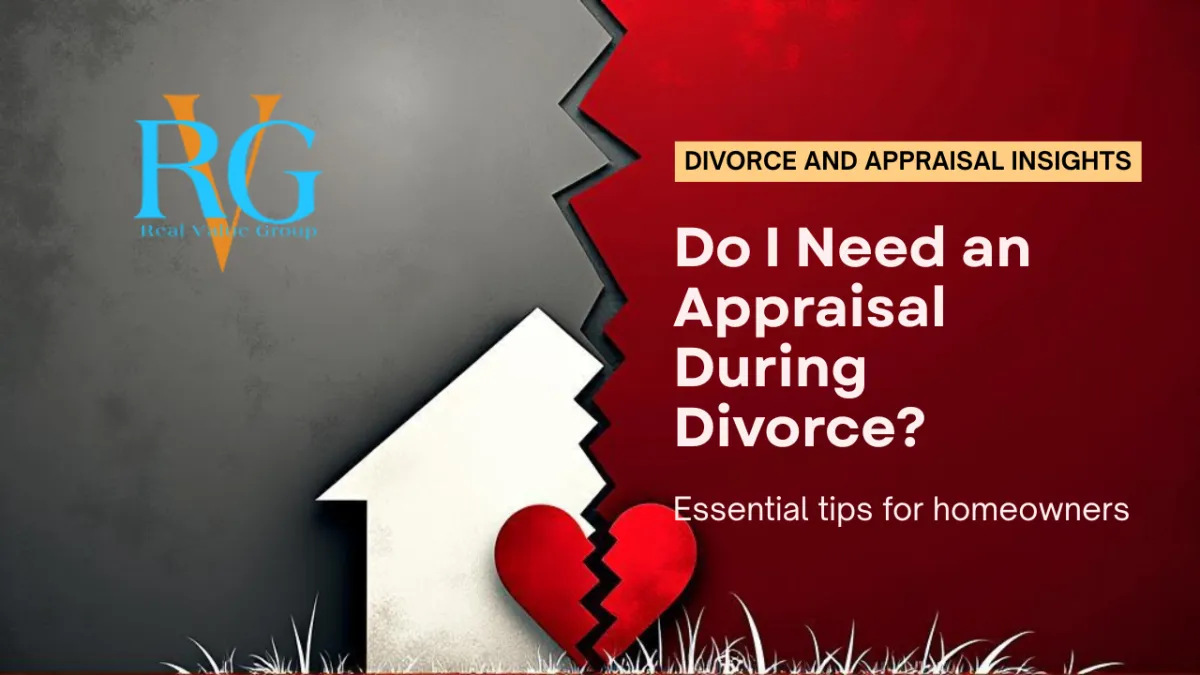
Do I need an appraisal if I'm getting divorced in West Michigan
⚖️ Do I Need to Get an Appraisal If I’m Getting Divorced?
(Why a Professional Home Appraisal Can Protect Your Interests)
Divorce isn’t just emotionally difficult—it’s financially complex. And one of the biggest questions that arises in nearly every divorce involving real estate is:
“Do I need to get an appraisal if I’m getting divorced?”
If you own property together—especially a primary residence—the answer is almost always:
✅ Yes, you do need an appraisal.
Here’s why getting a professional home appraisal is one of the smartest steps you can take during the divorce process, especially if you live in West Michigan.
🏠 The House Is Usually the Largest Shared Asset
In most divorces, the home represents the biggest financial asset that needs to be divided. Whether one person wants to stay in the home or you’re planning to sell and split the proceeds, you’ll need to know:
What is the property actually worth?
How much equity is available?
Is there enough value to justify a buyout?
💡 A professional appraisal provides a clear, unbiased answer to these questions—based on current market conditions, recent comparable sales, and property-specific factors.
⚖️ Courts and Attorneys Rely on Neutral, Third-Party Valuations
Real estate values are not something you want to estimate, guess, or argue over. A divorce-certified appraiser offers a neutral, court-defensible opinion of value that can be used in:
Mediation
Legal negotiations
Court proceedings (if needed)
Determining fair equity splits
In Kent County family courts, judges and attorneys rely heavily on appraisal reports to help make equitable property decisions.
🔁 What If One Spouse Wants to Keep the House?
That’s one of the most common scenarios—and one of the biggest reasons to get a divorce appraisal.
A formal appraisal:
Helps calculate how much equity buyout may be owed to the other party
Protects both spouses from overpaying or underselling the asset
Creates a clear, documented value for financial disclosure
Prevents future disputes over fairness
🧠 Example: You’re getting divorced in Grand Rapids, and your spouse wants to keep the house. You’ll need an appraisal to determine the fair market value, subtract the remaining mortgage, and calculate what’s owed to you as your half of the equity.
📆 Do I Need a Retrospective Appraisal?
Sometimes, yes. In certain divorces, especially where separation occurred long before legal action was filed, the court or attorneys may request a retrospective appraisal—which estimates the property’s value as of a past date (such as the date of separation).
This can be critical if property values have significantly changed over time.
🤝 Can We Just Agree on a Value Without an Appraisal?
In theory, yes—but in practice, it’s risky.
Without a formal appraisal:
One spouse may overvalue or undervalue the property
You may lose out on thousands in equity
Disagreements could arise later—potentially leading to legal disputes
The court may require an appraisal for documentation
For something as significant as a house, it’s better to base decisions on verified facts—not opinions.
🧠 Why You Should Use a Divorce-Specific Appraiser
Not all appraisals are created equal. When you're going through a divorce, you need an appraiser who:
Understands family law requirements
Is comfortable working with attorneys and courts
Can perform retrospective valuations, if needed
Provides detailed, court-ready reports
In places like Ada, East Grand Rapids, Rockford, and Kentwood, real estate values can vary block to block—so a local expert matters.
✅ Final Thoughts
If you're getting divorced and real estate is involved, a home appraisal isn’t just helpful—it’s essential.
It protects your interests.
It brings clarity to complex decisions.
And it ensures that you walk away from the divorce with a fair and accurate understanding of your home’s value.
Whether you’re staying in the home, buying out your spouse, or preparing to sell and split the proceeds, the first step is knowing what the property is really worth.